
Monk Blessing and Merit-Making Ceremony in a Thai Traditional Wedding
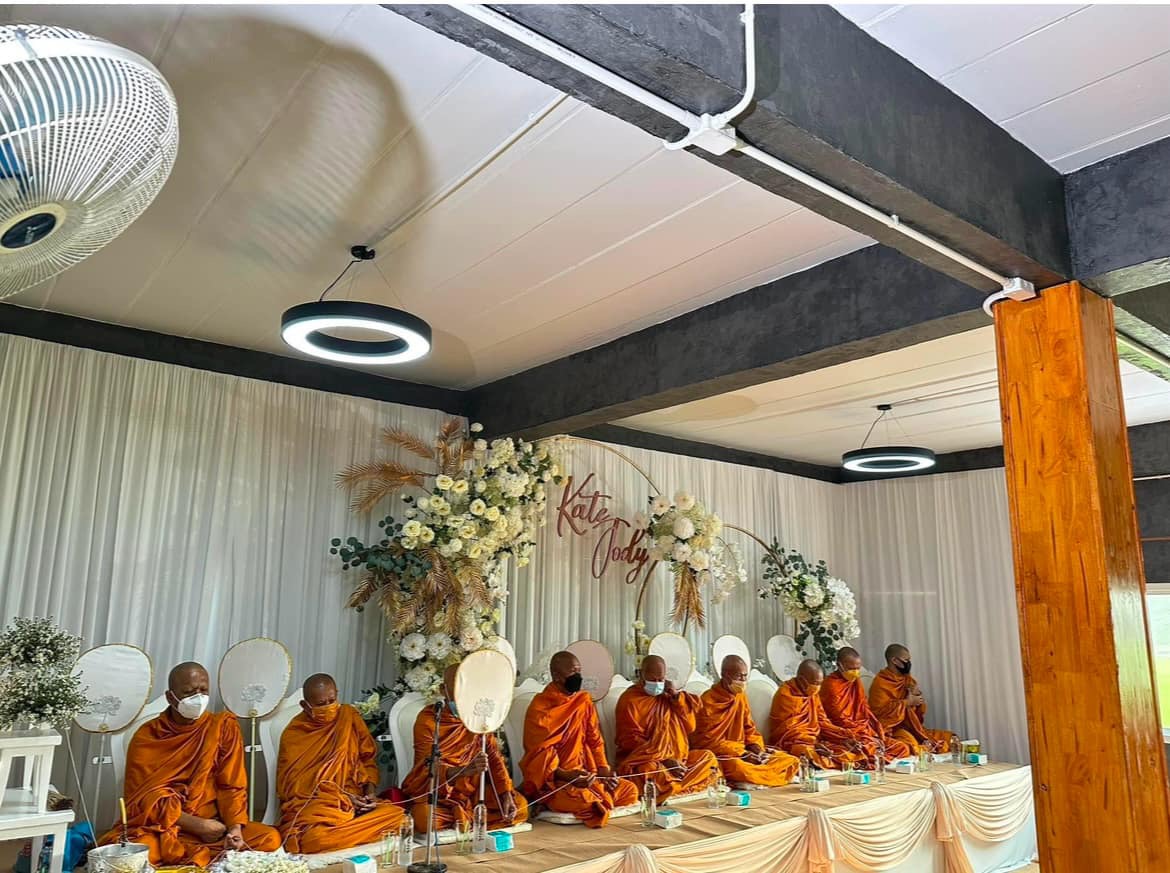
In Thai culture, a Buddhist blessing and merit-making ceremony is an important part of a traditional wedding. This ceremony adds spiritual meaning to the couple’s special day and is deeply rooted in Buddhist beliefs. However, it is open to everyone, even non-Buddhists or foreigners marrying in Thailand. The ceremony focuses on receiving blessings, showing respect, and making merit a key Buddhist practice believed to bring good luck and positive karma.
It’s important to note that this ceremony is cultural and does not legally register the marriage. For legal recognition, the couple needs to register their marriage at the local district office (Amphur).
The ceremony usually starts early in the morning, around 6 or 7 am, and is held in a private place, such as the home of a family member, rather than at a temple (wat). The couple invites monks to join the event as a sign of respect and to receive their blessings.
When the monks arrive, the ceremony begins with sacred chants and prayers, creating a peaceful and meaningful atmosphere. During the chanting, a candle is lit and placed in a bowl of water, turning it into lustral water, which symbolizes purity and protection. Later, this water is used to bless the couple. Additionally, white paste is blessed during the ceremony and gently applied to the bride’s and groom’s foreheads.
Offering Food to the Monks
A key part of the ceremony is making merit by offering food to the monks. The couple, along with their families, present trays of food to the monks to show generosity and respect. Once the food is offered, the monks eat their meal privately, following Thai customs. No one else eats until the monks have finished.
After the meal, the monks resume chanting, and the senior monk blesses the couple and guests by sprinkling holy water over them. Donations, often in envelopes, are placed on trays and given to the monks as a gesture of gratitude and respect.
Other Important Details
The number of monks invited is usually odd—3, 5, 7, or 9—because odd numbers are considered lucky in Thai culture. The presence of monks adds a spiritual and meaningful connection to the day. Some couples choose to visit a temple for this ceremony instead of hosting it at home, but the rituals, including merit-making and donations, remain the same.
Continuing the Celebrations
After the Buddhist ceremony, other traditional wedding rituals typically follow, such as the khan maak (engagement procession) and gate ceremonies. Together, these events combine joy, cultural significance, and respect for Thai traditions.
The Buddhist blessing and merit-making ceremony is a beautiful way to express love, gratitude, and hope for a happy and harmonious future for the newlyweds. It reflects the rich traditions and spiritual values of Thai culture while creating a meaningful start to the couple’s life together.
